
Value your values
Letter #3 – ⏳ Read time: 5 min 45 sec

Value:\va.lœʁ\
from the Latin valere, “to be worthy,” “to be strong,” “to be in good health.”
Dear you,
You told me that working on your values was “bullshit”. That you didn’t have the time or energy for this kind of “soft skill.” That you were building a business, not running a self-help retreat.
Well — “bullshit right back at you”.
I’m saying this with a smile, but also with radical care. And with some experience: I’ve seen too many CEOs fail because they never stayed true to what really matters. Without a clear set of values, it’s hard to lead, to inspire, or to build something that lasts. Even harder to scale it.
Yes, performance metrics — the famous Key Performance Indicators (KPIs) — are important. But they’re not enough. Your biggest asset is your team. People might follow you for a while if you only focus on results. But the day things get hard — and they always do — KPIs won’t hold the team together. What will? The values you made clear from the start.
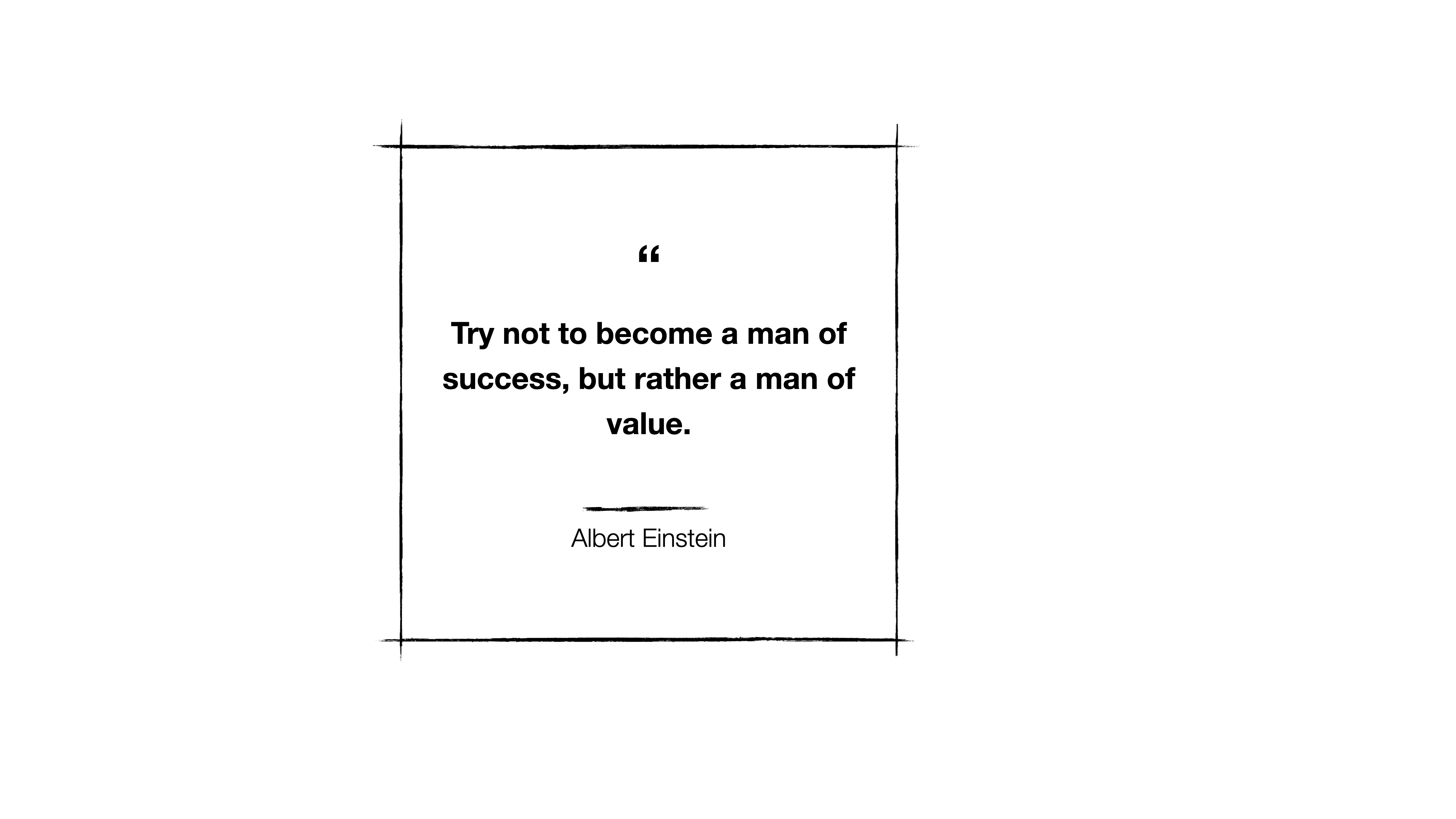
Einstein said: “Try not to become a man of success, but rather a man of value.”
Once again, Albert said it all. Success is the result. The real input is people. And what connects people in the long run is two things: your company’s purpose, and the values you all believe in. Let’s focus on values, since you said they were bullshit — and because, well… I really hope you’re not bullshitting yourself. Or others.
Give value to your values
“Value” has become a vague word in a world obsessed with numbers — asset value, deal value, market value, customer lifetime value, valuation. But we forget its true meaning. From Latin valere: “to be worthy,” “to be strong,” “to be in good health.”
Your values are your base. They’re what make your journey worth it, even when it’s hard. They’re why good people join you and stick around. They help you choose when logic isn’t enough. They’re what sets two candidates apart when skills are equal. They’re the reason why, during a crisis, someone on your team might say: “It’s tough, but I’m staying. I know what this place means to me.”
The real value of your company starts with what brings people together. If you make your corporate values clear, they’ll help you hire better, make tough decisions faster, go through hard times, and know who’s right to go with you — and who’s not.
So no, it’s not bullshit. But I get it — maybe you just don’t know how to define your values or how to use them. Good news: admitting that is already of value!
Let’s keep going.
Start with what energizes you
Defining your company values starts with you. And with your co-founders, if you have any. Don’t copy other startups. Don’t try to write the perfect slogan. Just name what really matters to you. What you want to live, even when it’s tough. Especially then.
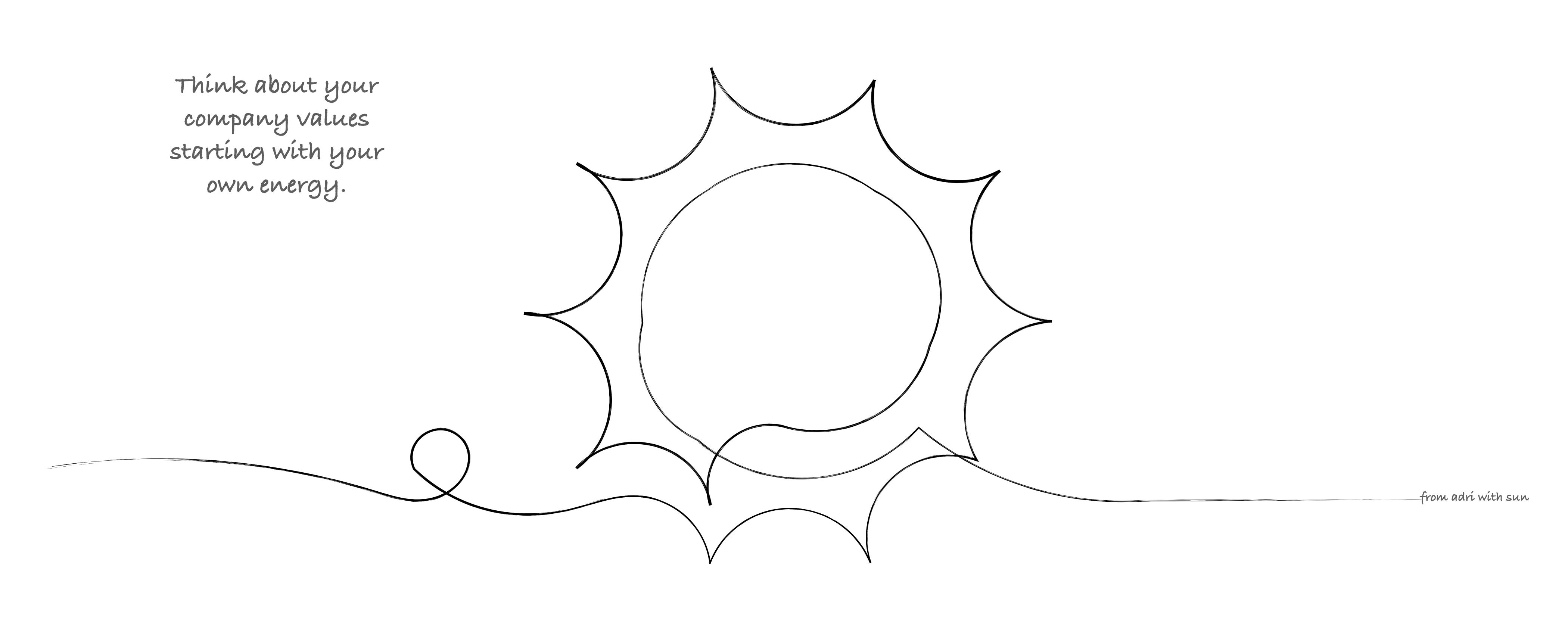
Think about what gives you energy. What makes you feel aligned. What gets you moving — in your day, in your choices, in your relationships. Ask yourself: what truly energizes me — physically, emotionally, intellectually, socially?
Think back to your best days. The projects that flowed. The moments when everything felt right. That’s the raw material for your value system.
Like I said in our first letter, building a clear way of thinking takes time — time to doubt, reflect, and refine. Take that time. Go back to your notes. What comes back again and again? What really matters?
If you’re still unsure, here are five questions to help you start:
What helps me keep going when everything’s hard? (resilience)
What makes me truly effective, alone and with others? (performance)
What makes relationships work well, even with very different people? (joy)
What’s my rule when it comes to ethics? (integrity)
And for my team, clients, and partners — what do these answers become?
These questions cover a lot for a company that wants to grow, and for a CEO who wants to embody the culture. Your answers could be strong building blocks. Sharpen them. For instance, for each value, you could pick one clear word. Describe what it means in action. Keep refining until it feels right. If it doesn’t click, start again. It’s worth the effort.
Then share it. Your values should live in your company, not just in your head. At first, this system is yours. But it grows stronger when you talk about it, improve it, and build it with your team. A strong value system is alive, but not all over the place. It can evolve, but not lose its shape. It should guide decisions, conflicts, hiring. To do that, people need to understand it, feel it, own it. So I invite you to start on your own. But then finalise it with your team — so it becomes your shared foundation.
Be a value-driven entrepreneur
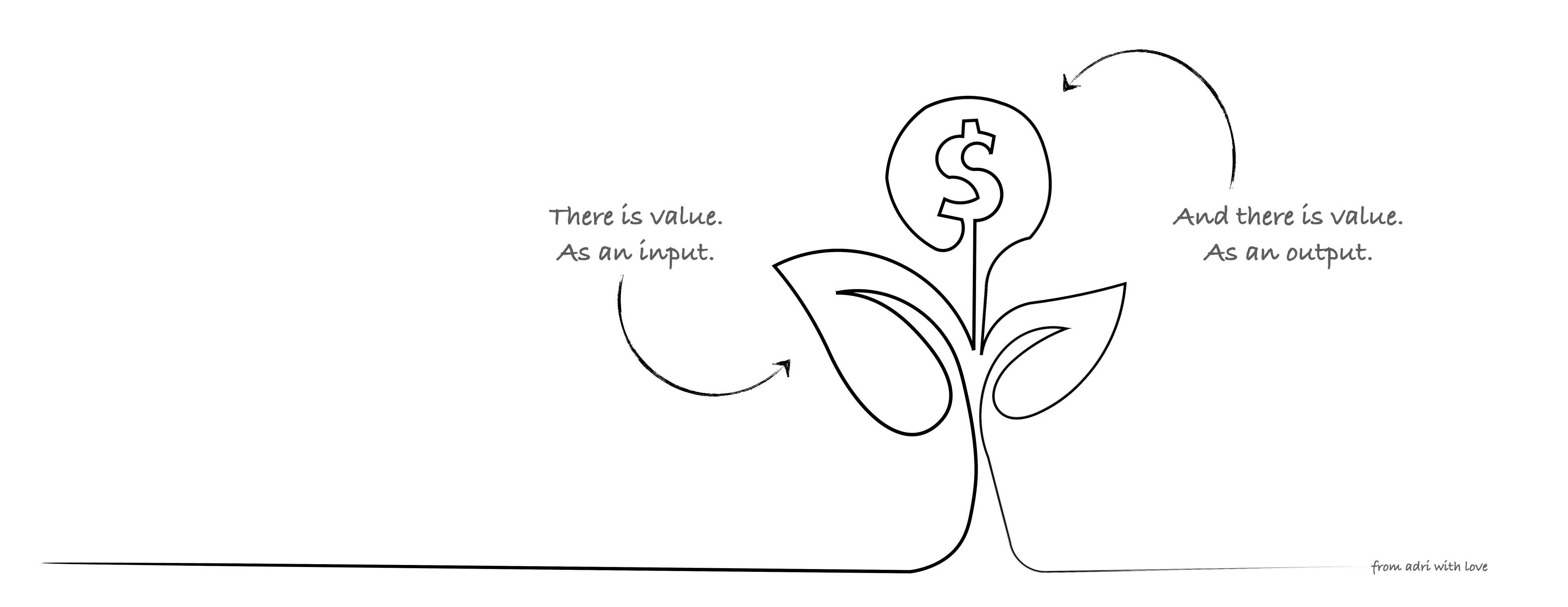
Let me say it one last time: your values are your most precious asset from day one. I insist because I want to protect you from a common trap — thinking that the only value that counts is money. That mindset exists. And sure, it works… for a while.
But after coaching hundreds of CEOs over the last ten years, I can tell you this: those who ignore this topic, who fake their values, or who never live by them — they all hit a wall. Every time. Because they can’t attract the right people, can’t keep them, and slowly break the culture of their company.
Your values won’t guarantee your company’s success. But not having them — or betraying them — makes failure almost certain. And usually it’s more painful than expected.
So be a value-driven entrepreneur, my dear you. Value your values. You’ve got nothing to lose. Everything to gain. And your team — and the rest of the world — with you.
Take care,
Adri
📪 P.S. After goals and now values, next week is about the beauty of routines — to stay aligned and keep moving forward, week after week. 📭
Time to Coach yourself.
Coaching Science
In behavioral science, values are cognitive shortcuts. They reduce complexity in moments of uncertainty. Instead of re-evaluating every decision from scratch, we rely on internal principles to decide faster, more coherently, and with less stress. Herbert Simon called this bounded rationality (1955): the brain optimizes for speed and coherence, not perfection.
In teams, values act as invisible coordination mechanisms. When people share a clear value system, they don’t need constant supervision or detailed processes. They anticipate, adjust, and align more fluidly. Research on shared mental models shows this is a key driver of agility and resilience — especially in high-pressure, fast-moving environments (Weick, 1995; Chatman & O’Reilly, 2016).
Clear values also strengthen psychological safety — the feeling that you can speak up, disagree, and take initiative without fear. When values are lived (not just claimed), trust grows. Engagement increases. Attrition drops. It’s one of the strongest predictors of team performance in scale-ups (Edmondson, 1999; Lencioni, 2012).
In short: values aren’t soft. They are a core operating system — helping your company think faster, move smarter, and hold together when it matters most.
📚 For more: Organizational Culture and Leadership – Edgar Schein. A foundational book on how values shape culture, and how culture shapes behavior. Dense, yes — but chapters on shared assumptions and alignment are insightful.
Coaching workout
Write down three real decisions you’ve made in the last month — one hard, one fast, one collective. Then for each, ask yourself: Which value was at play? Which one should have been?
If something felt off — or didn’t take you where you hoped — that’s not a failure, it’s a signal. Maybe it’s time to revisit your values. Go back to the questions from this letter. Refine the words. Reconnect with what truly drives you.
It’s a simple check-in. But it can shift everything — from how you decide to how your culture holds together.
Coaching discussion
Need more? Help me to help you. If this letter resonates, if you want to value your values, work on them, join the discussion and share your thoughts — I’ll always reply, and whenever possible help you push your reflection further.
Merci Adri , pour cette lettre , J’aime beaucoup cette notion de valeurs à partager et à co-construire, parce qu’elle est, à mes yeux, le fondement d’un groupe cohérent et d’un chemin commun.
On les a même afficher au cabinet pour s’en rappeler souvent ++
Car On oublie souvent que lorsqu’on s’en éloigne, on finit par se perdre — et quand on est perdu, on ne sait souvent plus pourquoi.
J’adore aussi le lien avec les neurosciences et la validation par la littérature scientifique, qui donne une légitimité et une profondeur à cette réflexion.
Je te rejoins totalement sur le fait que savoir pourquoi on va bien, et être capable de le nommer, est un exercice rare mais essentiel. C’est un texte qu’on devrait relire souvent.
Il invite à une introspection parfois inconfortable, à s’entourer de personnes qui nous sécurisent, à identifier les profils qui nous aident à rester alignés, et à savoir renoncer à certaines personnes brillantes mais non alignées – même si elles pourraient sembler, à première vue, “efficaces” pour le développement.