
Be inspired. To inspire.
Letter #1 – A year of silence. A 5-min letter to come back.

inspiration /ˌɪnspɪˈreɪʃn/
Process of being mentally stimulated to do or feel something, especially creative.
Dear you,
Thank you for your kind follow-up last week. It’s been a year since I last gave any news — and it’s high time I did. I’m, finally taking a moment to write to you — with this first coaching letter.
Think of it as an informal editorial, a way to shed light on the intention behind this budding correspondence.
You asked me the other day how the idea came about to write a weekly coaching letter. I could answer in two words: slowly, and naturally.
Slowly, because over the past year, I’ve had to do what I so often ask of others: take a step back. Cut out the noise. Come back to what truly matters. And waited until I felt inspired again before sharing anything that felt truly worthwhile.
Naturally, because by giving myself that space, I was able to clarify what I want to do next, where I want to commit, and how I want to speak about it.
So here we are.
Over the past few months, I’ve returned — out of passion — to my work as a CEO & founder coach. I’m also working on and investing, as you know, through my holding company millimetr, in several tech projects tied to that niche world of coaching.
And finally, I decided to write. Because I want to. Because it scares me — and it’s worth stepping out of my comfort zone. And because it’s time I responded to the many who’ve asked me to share my approach to leadership coaching. But how?

How to share coaching experiences — and make them count?
As you know, I’ve had the chance to work with exceptional CEOs and founders for nearly ten years now — close to 300 of them. Across France, Europe, and the US. Mostly at the scale-up stage, generally post-Series A or B. And these coaching journeys have given me — and continue to give me — a wealth of unique experiences.
Because confidentiality is the foundation of my work, I’ve never shared anything about those conversations. But several clients, partners, investors, and peers have encouraged me to pass on what I’ve learned — an expertise that could, it seems, help other leaders, present or future. So why not. Let’s try. But how?
The content wasn’t the issue — after thousands of hours spent serving others as a coach, I’ve gathered, I believe, a body of material that’s rich and varied enough.
My real challenge was the format. To me, it matters just as much as the substance: it’s what makes ideas clear, readable, and memorable over time. And since this was about coaching, I wanted a format that would be genuinely useful to whoever was reading me.
So how could I share these experiences? How to make them interesting, light enough to read — yet genuinely helpful and applicable? How to convey insights that could each deserve dozens of pages, without overwhelming the reader or making them stop halfway through, exhausted by content too dense or complex to absorb?
Most importantly: how to do it without betraying what I see as a true craft? As I recently shared in La Tribune, I consider coaching an art — and like any art, it demands care, rigor, and respect. So how can I avoid the oversimplifications that have become so common, often pushed by impostors who dilute its meaning through inexperience, opportunism, or plain ignorance? And finally: how to do it in a way I’d enjoy over time — while staying true to what I stand for?
‟ COACHING INSIGHTS –LET’S PAUSE FOR A MINUTE 💡
I often say that in coaching, questions are the answer. So when it came to moving forward with my writing projects, I turned to my own inner questions. In coaching, we call them self-reflection questions. These were the ones — and the dilemmas — that came back each time I revisited the topic of format. And in the end, asking myself the right ones brought me to a clear, simple answer. I’ll share more on this in this week’s coaching workout below.
Be inspired. To inspire.
There’s a paradox I often see in the leaders I coach — and it helped me decide. At some point, they all ask themselves how to become more inspiring. Whether toward their teams, clients, board, peers, investors — or simply their close circles. But we often forget one simple truth: to inspire, you first have to be inspired.
And being inspired requires being nourished: by reading, traveling, moving, idleness, any form of learning or contact with art — music, painting, dance, architecture… It requires creating space, and allowing these new perspectives to settle in, inhabit us, and transform the way we look at the world.
It takes time — in daily life, in work, in everything. And above all, consistency.
And yet very few (too few, perhaps?) leaders take that time. Most don’t make it a priority. Overwhelmed by their responsibilities — constant demands, “urgent” decisions, relational or operational issues — they end up with little space, and even less energy, to feed their inner world and create the conditions to be creative, naturally inspired… and therefore inspiring.
For a leader, nurturing inspiration should be as simple as opening a window to air out a room: no need to force it, just turn the handle gently and let the air and light flow in — freely and regularly.
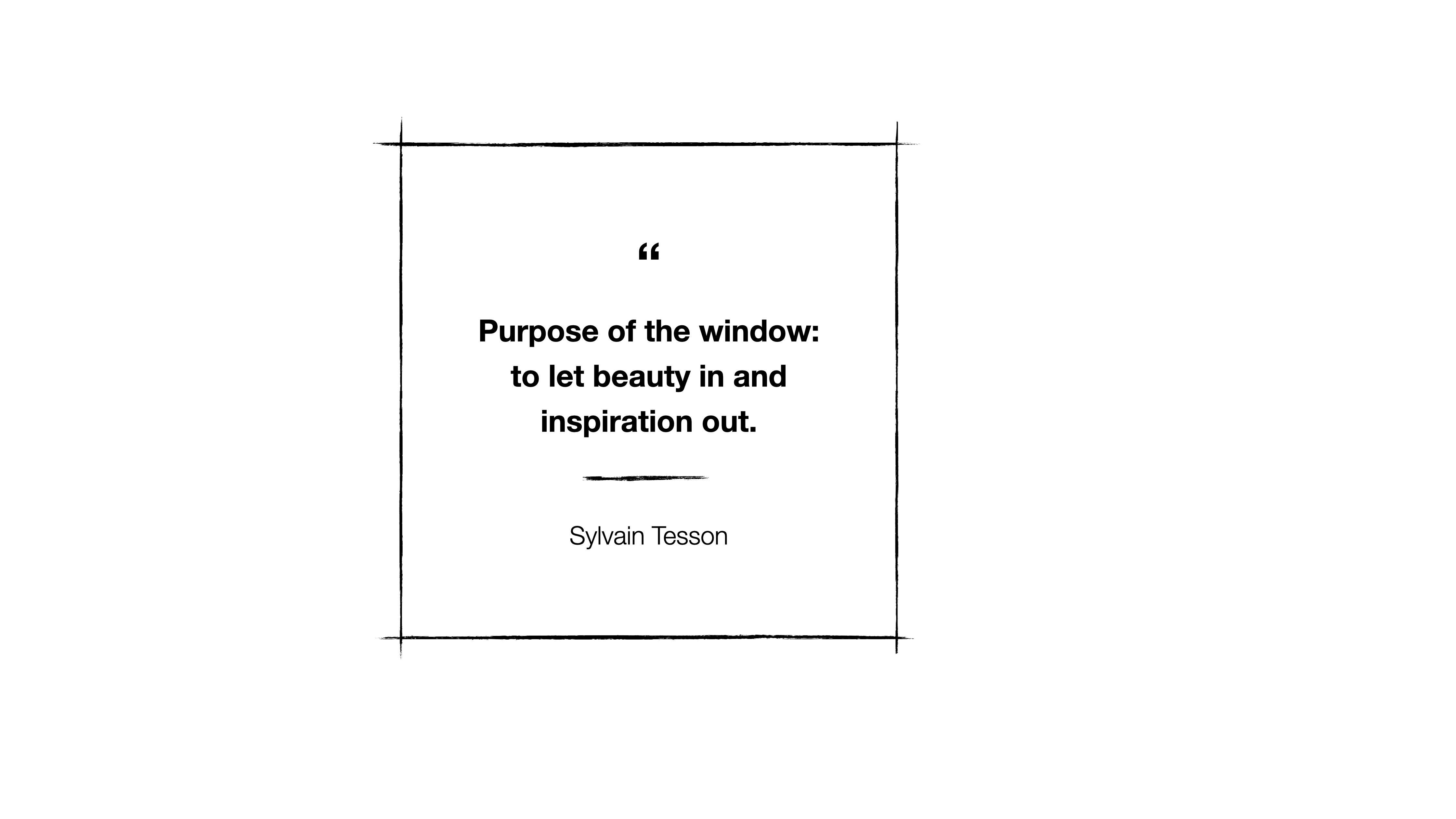
A 5-minute coaching letter. That could fuel a hundred more.
So the format I was looking for had to feed my readers with real substance — and for that, be rich and dense — while remaining short enough to read without effort or time pressure. A format that, in the middle of hectic days, would invite a brief slowdown. One that could still convey deeper thoughts on leadership and management.
One night, while rereading Rainer Maria Rilke’s Letters to a Young Poet, it hit me: “of course!”. The format I had been looking for was right there — a letter. A coaching letter.
A letter that reminds us — through its very simplicity — that the best things are often the simplest ones. And that their power lies not in their precision or length, but in what they suggest, over time, by their rhythm and recurrence:
There are a thousand ways to write a letter — and you’d be right to say so. But in the end, only one really made sense: writing it the way I would have wanted to receive it myself.
I’ve chosen to write each one to “Dear you” — a young, fictional CEO. No name. Could be anyone. Could be any of us. This “you” is made up of all those I’ve worked with. Their decisions, their doubts, their tensions.
Each week, I’ll respond to one of this CEO’s current challenges: a team conflict, personal stress, time management, board dynamics, interpersonal issues, tough calls, strategic clarity, execution problems, fundraising, hiring, culture, media pressure, legal or financial tensions… The character is fictional, but every situation will be inspired by real coaching experience.

I’ll start by showing what I understand of their context, then walk them through their core challenges, and finally offer some paths forward — based on concrete tools and methods drawn from professional coaching.
I’ll post these letters every Wednesday. Published in short form on LinkedIn — and in full on Substack.
And you, as a quiet observer, will be able to follow along. Because — as you’ve probably guessed — these letters won’t just be for that one CEO. They’ll be a pretext for you to absorb, almost by osmosis, ideas and tools to help you grow as a leader, a manager — and strengthen your own ability to coach yourself and others.
I’ve designed them to be read in the moment. I hope they’ll show up in your week like a pause, a small suspended moment. I write and post in English — but hey, French is my native tongue, et ne t’inquiète pas, je n’ai pas oublié d’où je viens. So every letter will also be available in French on my site, Coaching Letters 🇫🇷🇬🇧.
The weekly rhythm will, I hope, serve as a reminder: even in the chaos of leadership, it’s still possible — sometimes — to take five minutes to read something that inspires you. Something that might help you reflect, reframe, and lead with more depth.
A letter you can read in five minutes — but that might light the way for a hundred.
A letter that now belongs to “you”
Dear you,
What matters most isn’t what you read here each week — but what it sparks in you, and what you choose to do with it.
I hope these letters find their place in your rhythm. That, now and then, they prompt a useful pause. That they help you reflect, reconnect, or simply feel a bit more aligned — as a leader, a manager, or just as yourself.
I hope you’ll see your own questions in the mirror. Use them to work through your tensions. Anticipate what’s ahead. Or name what’s already there, quietly.
I want these letters to stay alive. To resonate. To open doors — whether in the comments, in your own reflections, or in a more private exchange if that ever feels right.
If a letter speaks to something you’re holding, I’ll always try to respond as clearly as I can — and, if possible, help you take your thinking a step further.
And if one day, one of these letters helps you through a difficult moment — or brings you a little clarity — then I’ll know I wrote for the right reasons. Feel free to let me know: a word, a comment, or even a small reaction. It will give our correspondence — and my commitment — their full meaning.
if it resonates with you, make these letters a weekly rendezvous with yourself — a few minutes to pause, realign, and nourish your inner-self. At work, and beyond.
Take care,
Adri.
📪 P.S: In next week letter, we’ll explore how to “set meaningful leadership goal” 📭
Time to Coach yourself.

Coaching technique of the week
Self-reflection questions.
In coaching, we often say that the right question matters more than the right answer. A simple pause — paired with a well-placed question — can interrupt mental overload, quiet emotional reactivity, and create space for clarity to emerge.
That’s also how inspiration works. It rarely appears on command. But it often shows up once the noise drops and the deeper circuits come online.
Neuroscience confirms this : moment of self-reflection activate key areas of the prefrontal cortex — the part of the brain responsible for long-term thinking, insight, and regulation. In other words: asking better questions helps you access better answers — and better states.
Want to dive deeper into the science behind? Here’s a cornerstone resource: Lieberman, M. D. (2007). Social cognitive neuroscience: A review of core processes. Annual Review of Psychology.
Coaching workout of the week
Self-reflect on your own inspiration.
So let’s pause. Take a minute. Just enough to breathe, feel, and ask yourself:
What struck me most as I was reading? What came to my mind?
When was the last time I felt truly inspired?
What made that moment feel so alive?
What might be missing today for that spark to reappear?
What’s one small thing I could do this week to move back towards that energy?
No need to overthink. Just let the questions do their quiet work.
Coaching discussion of the week
Need more? Help me to help you. Let’s start a discussion.
If this letter resonates with something you’re carrying, join me in the discussion space and share your thoughts. I’ll always reply — and whenever possible, help you take your reflection one step further.
And because I want these letters to stay useful, tell me what you’d like to read about: topics, questions, coaching angles. Your input will inspire me in return and turn this into what it should be — a living and meaningful correspondence between us.
Thanks Adri for putting in this simple letter format the reflexions and insights you would like to share easily with a wider community.
I like the format and look forward reading more.
Thank you Adri, very usefull. Very inspired by what you deliver to our community !
This format is really adapted.
Keep going !