Routine vs. Routines
Letter #4 – ⏳ Read time: 6 min 10 sec
Routine:/ruːˈtiːn/
from Old French route, derived from Latin rupta, literally “a path opened through”; a way carved by repeated passage and constancy.
Dear you,
“Adri, I swear, I’ve tried everything: the Miracle Morning, the 4-Hour Workweek, and now I’m on a 996 schedule… nothing works.”
We laughed about it yesterday, but it was a nervous laugh, I could tell. Because this question of rhythm - yours, and your team’s - is both critical to delivering your strategic plan… and painfully hard to get right. You said it yourself: your ability to “keep the pace, find the right routine,” will determine whether your project moves from dream to reality, from ambition to execution.
And yes, it’s hard. For you, as for many of your peers. It’s a real leadership dilemma: you know that at your level, you can’t let the week unfold by chance. You need structure, for yourself and for others. Yet at the same time, you rightly refuse to fall into rigidity. Finding personal and collective routines that make sense, that last, that frame without trapping… good luck with that, as they say.
If there were a one-size-fits-all formula, we’d know it by now, wouldn’t we? So instead of chasing the perfect (or trendy) routine, what if you took a real moment to define the mix that truly fits you? Shall we explore that together?
Routine vs. RoutineS.
Everything might hinge on that “S.”
Because in truth, the point isn’t to have a routine, but to have yourS. That’s where the real difference lies: routine sounds mechanical, soulless; routineS, on the other hand, suggest a system of deliberate gestures, distinct, complementary, and deeply your own.
If you think of your leadership routine as a series of meaningless tasks, copied from what others do, dictate, or claim you should do… do you really believe it can work for you? Or for anyone else on your team? “Unlikely,” you told me.
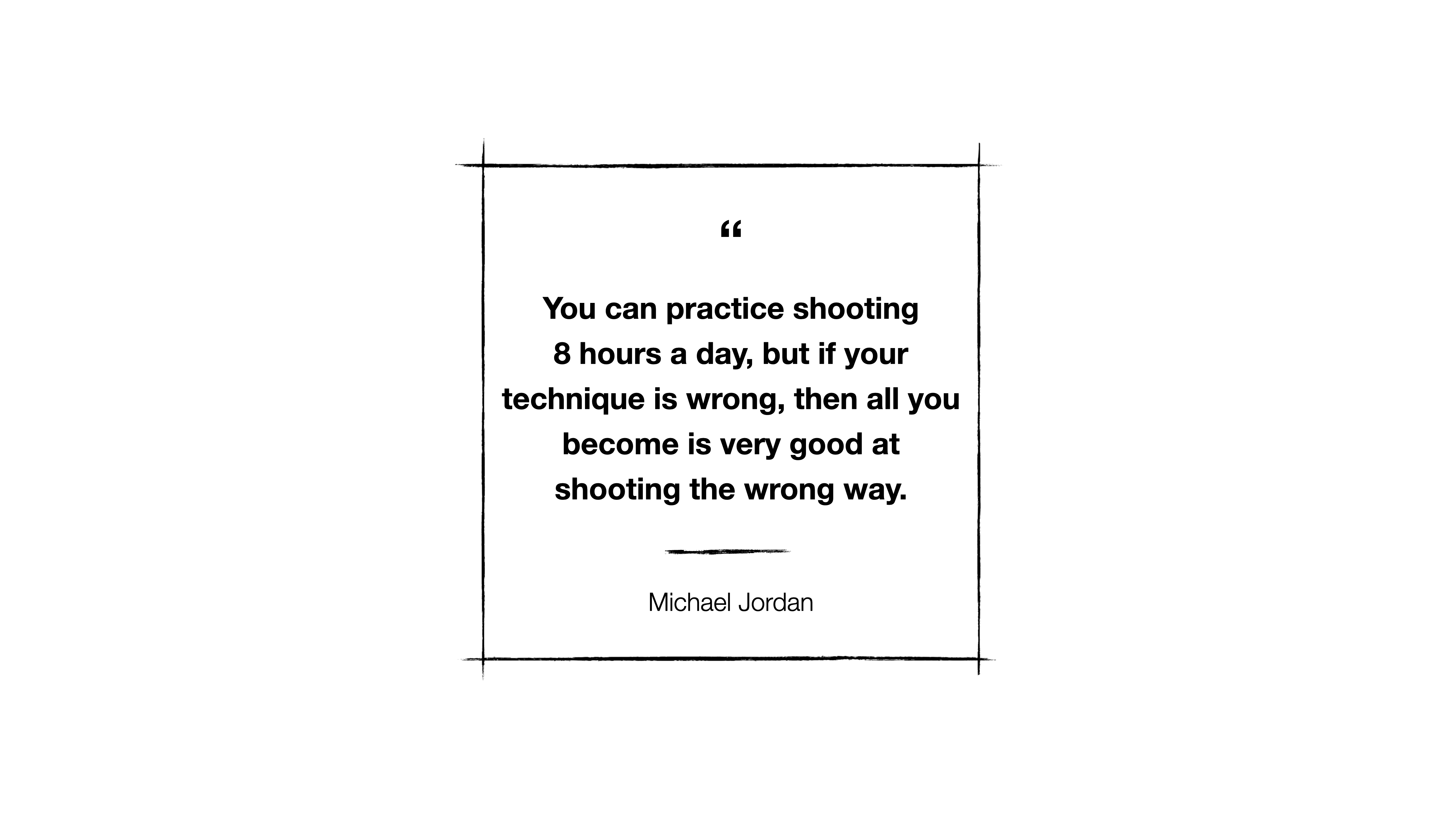
Michael Jordan, in his own way, seems to agree: “You can practice shooting eight hours a day, but if your technique is wrong, then all you become is very good at shooting the wrong way.”
And that’s exactly what I’ve seen after nearly ten years of coaching CEOs. Those who haven’t developed a technique of their own often end up trapped in a caricature of the “leader routine.” On one side, the hyper-structured types, who codify everything, cram every slot of their calendar like an impossible Tetris, only to collapse three weeks later. On the other, the hyper-free spirits, convinced they’re more creative in chaos, but who end up creating real chaos for themselves and for their teams.
The key, as often, is balance. Finding the right blend of routines that define you: connected to your personal life (yes, that matters), your leadership stance, your role as a manager, and your work as a doer. Each of these dimensions deserves its own focus, and its own routine.
That’s the technique I suggest we explore together: the one that will help you feel grounded, consistent, and able to sustain it over time.
Routines that make sense.
It all starts with an obvious truth: you only have twenty-four hours in a day. You sleep seven or eight — at least, I hope so. That leaves sixteen. And in those sixteen, you still have to eat, move, breathe, and sometimes, omg, think. So no, you can’t do it all.
But you can do better, by looking at your calendar with fresh eyes, as an outside observer. And asking yourself:
What do I like in what I see, and want to keep?
What feels heavy, even unbearable, and should drop?
What’s missing, and what would I love to start and see appear?
Do this with a holistic view of your life. Because at your level, the line between personal and professional is basically gone. Acknowledging that porosity is already a sign of lucidity. Within those sixteen hours, you can’t just be a delivery machine. That would be, pardon the word, utterly stupid — intellectually, emotionally, physiologically, existentially.
Once you’ve done this self-assessment, take the time to rebuild your schedule around what truly matters to you. The goal isn’t to add more, but to better balance your energy across the four dynamics that make you who you are:
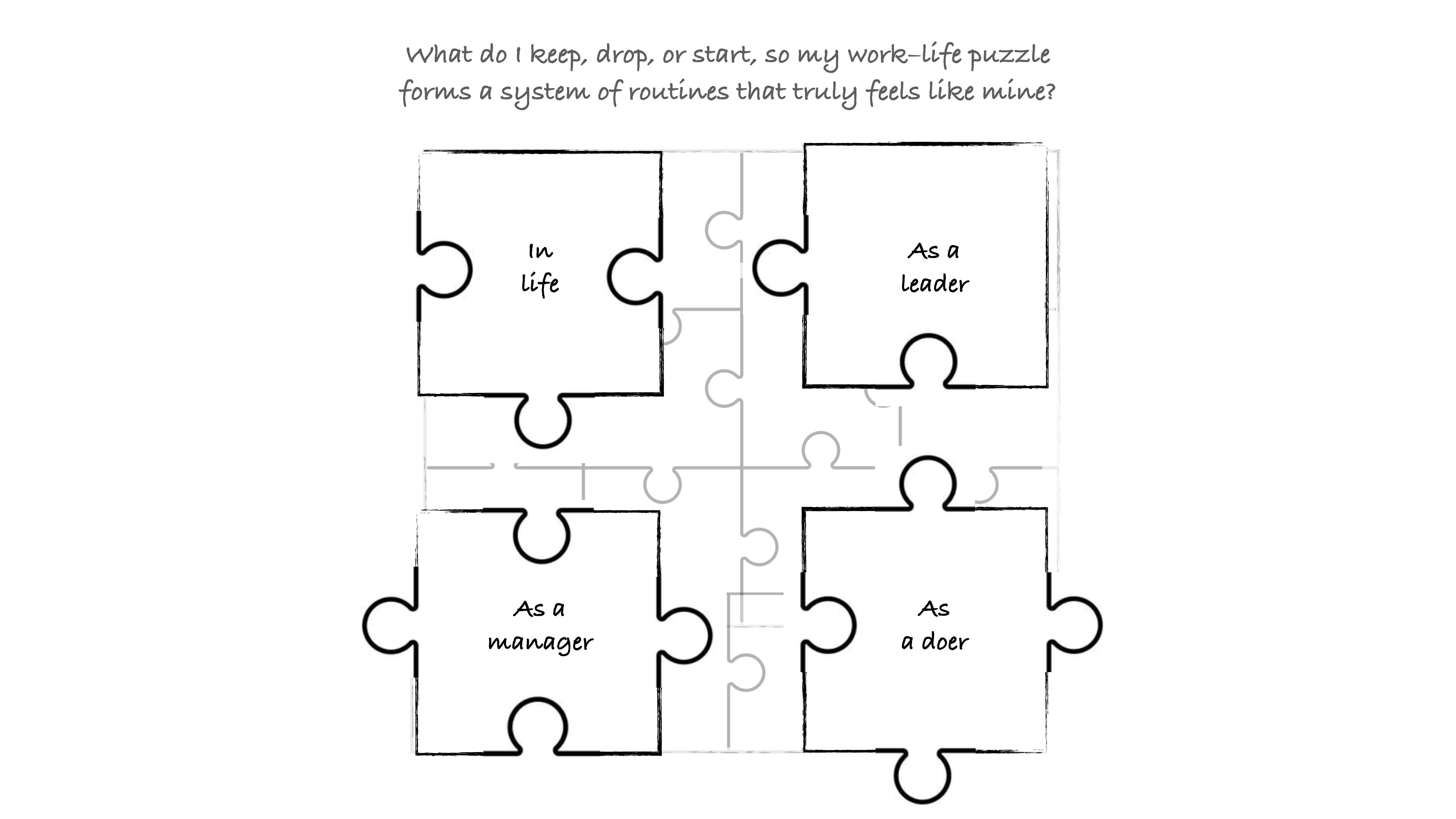
Your personal dynamic, the one that restores you. Time for your body, your mind, your family, your friends, music — everything that grounds and genuinely recharges you. Start there. Because otherwise, the high achiever in you will always find a good reason to postpone it.
Your leadership dynamic, where you inspire, embody, and carry the vision. Where you tell the story — and the stories — of your company, both inside and out.
Your management dynamic, where you structure, delegate, give feedback, support, and help others grow. Where you channel efforts and turn vision into collective motion.
Your doer dynamic, where you step back in as a contributor among others. Where you tap into your zone of genius to unlock challenges, move projects forward, or invent new standards.
Once you’ve drafted this first version, let it rest. Come back to it later, with a clear mind, to refine it step by step. Think about the days, the time slots, the durations and sequences that feel most right and most sustainable. You’ll have trade-offs to make, necessary sacrifices. But by combining, day after day, these dynamics that nourish the leader you are, you’ll end up building a system of routines that fits you, adapts to you, and lasts.
Consistency always beats intensity.
RoutineS… from the Latin rupta, “a path opened through” — in other words, a road carved by passage, movement, repetition. You see it now, that “S”?
It reminds you that the first routine that matters is precisely the one where you take time to define your own unique system of routineS.
It reminds you that your routines are never fixed. They move, breathe, and evolve with you. Each week, each month, brings a chance to adjust, iterate, refine these personal and professional rituals — as a person, a leader, a manager, a doer.
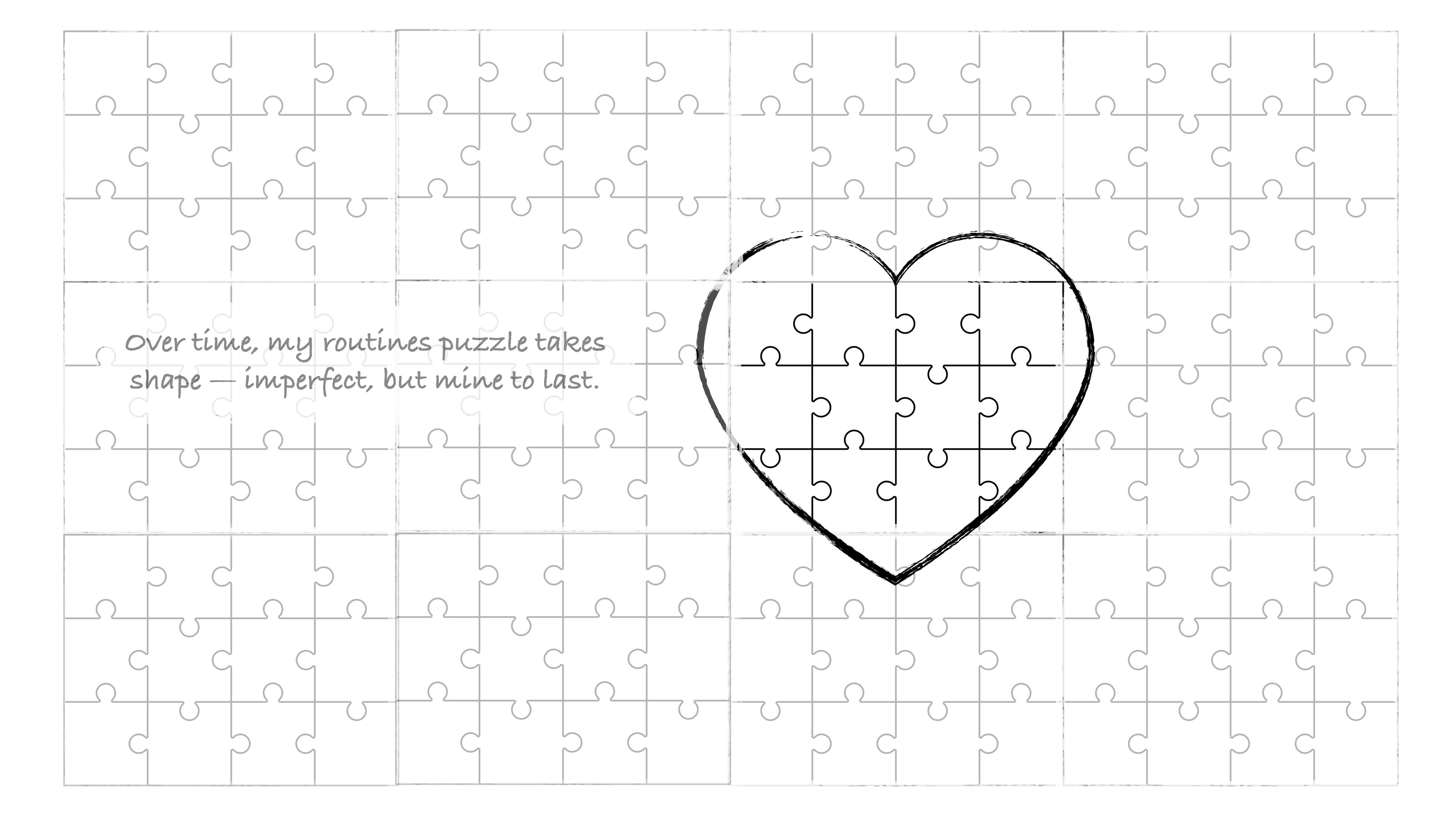
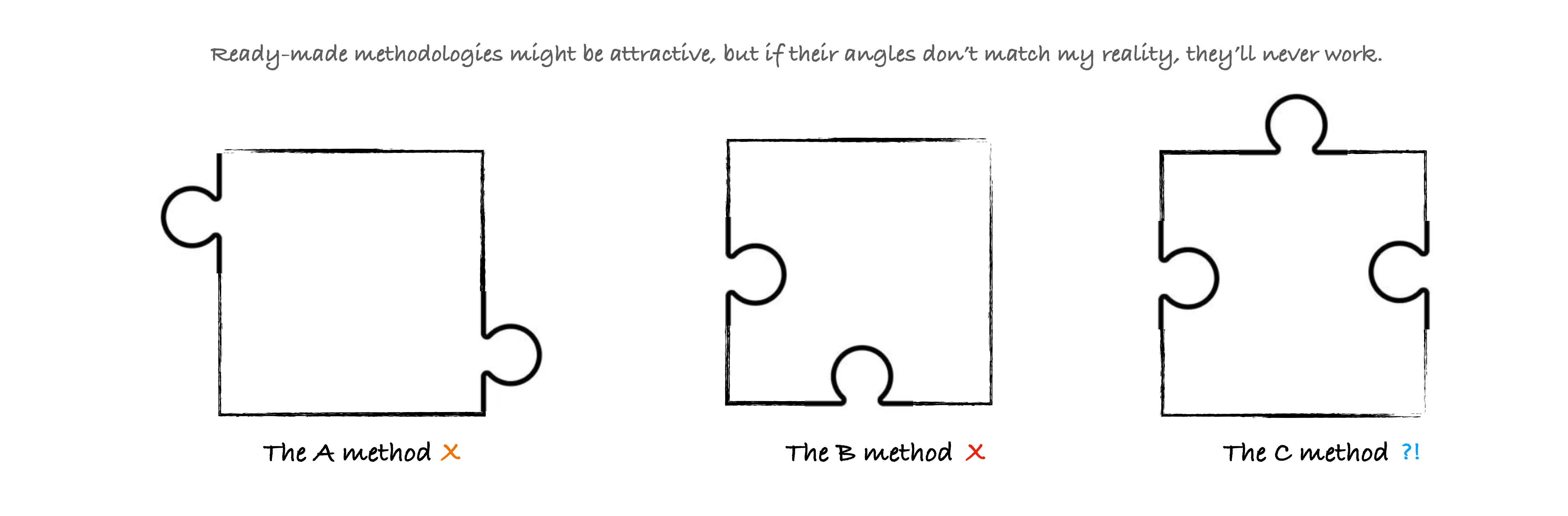
And it reminds you that you’ll have many routineS throughout your life as a leader, because your context, needs, and desires will keep changing. What matters is staying constant in this exercise of adjustment. And that constancy can only exist if you master your own technique. Ready-made methods have their charm, but at best, they age poorly; at worst, they hurt. The only one that works is the one you make yours, written in the first person.
So yes, to hell with the routine. Long live yourS !
Take care,
Adri
📪 P.S. Next week we’ll explore your strategic planning and why “the Plan is not the point. It’s the Process.”. Speak soon ! 📭
Coach yourself.
Coaching Science
Think of your brain as a forest. Every habit is a trail — some freshly carved, others deeply grooved. The basal ganglia, the brain’s “autopilot center,” keeps these trails open so you don’t have to rethink every step (Graybiel, MIT, 2005). Once a path is walked often enough, it becomes the default route.
That’s why habits are hard to change: you can’t erase the old path. You can only stop walking it, and start cutting a new one beside it — same starting point (cue), same reward, but a different route (routine). At first, the new trail feels clumsy, unnatural. But with repetition, it gets easier, clearer, faster — while the old one grows over with weeds. That’s neuroplasticity in action (Hebb, 1949).
In short: You don’t break old habits. You outgrow them, one step and one trail at a time. And that’s what routines really are: not rules or rituals, but chosen paths you decide to keep walking, until they become your own terrain.
Coaching workout
This week, how about trying this: Print your last week’s calendar and use three highlighters — green for energy gain, red for energy drain, blue for neutral. Then look at the pattern. What do you notice? Too much red? No green at all before noon? Adjust next week’s schedule accordingly. Add one “green” block per day in your personal, leadership, management, and doer dynamics. That’s your starting point.
Coaching ressources
📚 For more: Atomic Habits by James Clear — both his book and his talk at Google are worth gold. He explains with precision how small, consistent habits compound into lasting transformation — and why identity-based routines (“I am the kind of leader who…”) outperform goal-based routines.