
Scale the process. Not the plan.
💌 Letter #6 – ⏳Read time: 5 min 41 sec
Process:/ˈprəʊ.ses/
Process is derived from the Latin verb procedere. It is composed of pro (“forward”) and cedere (“to go, to walk”), which later also took on the sense of “to withdraw, to yield.”
⚡️In a rush today? 👉 Catch the 30-second version at the end of this letter 👇❤️
Dear you,
“I don’t have time to go through that whole collective circus again. We’ll waste weeks. I’ll draft the plan myself: it’ll be faster and clearer.”
You said it with that particular tension that comes at the end of the year, the moment when you already have to anticipate 2026 while still sprinting through the final quarter of 2025 to deliver last year’s plan.
Flashback.
Remember last November? Same scene. Back then, your goal was for “the team to take ownership of the plan.” We spent time exploring how to make that happen, and you’d realized how essential it was to build a genuine collective reflection process.
But because “processes are boring as hell”, you eventually decided to wrap up the plan on your own, in two days. The result was brilliant: sharp, inspiring, precise. Except three months later, no one remembered what the plan was or how to execute it. You spent the rest of the year repeating, reframing, realigning. Painful. Very (very) painful.
We’d then explored what had caused that. And you’d seen that the issue wasn’t the plan itself, but that it had been “born without any process.”
Fair enough.
So what if, this year, tedious as it may seem, you applied what you learned last time? What if you started with the process before the plan, so your team could truly own it and you could all move faster, not just further?
Shall we try to re-process this reflection together?
Slowing down to move faster
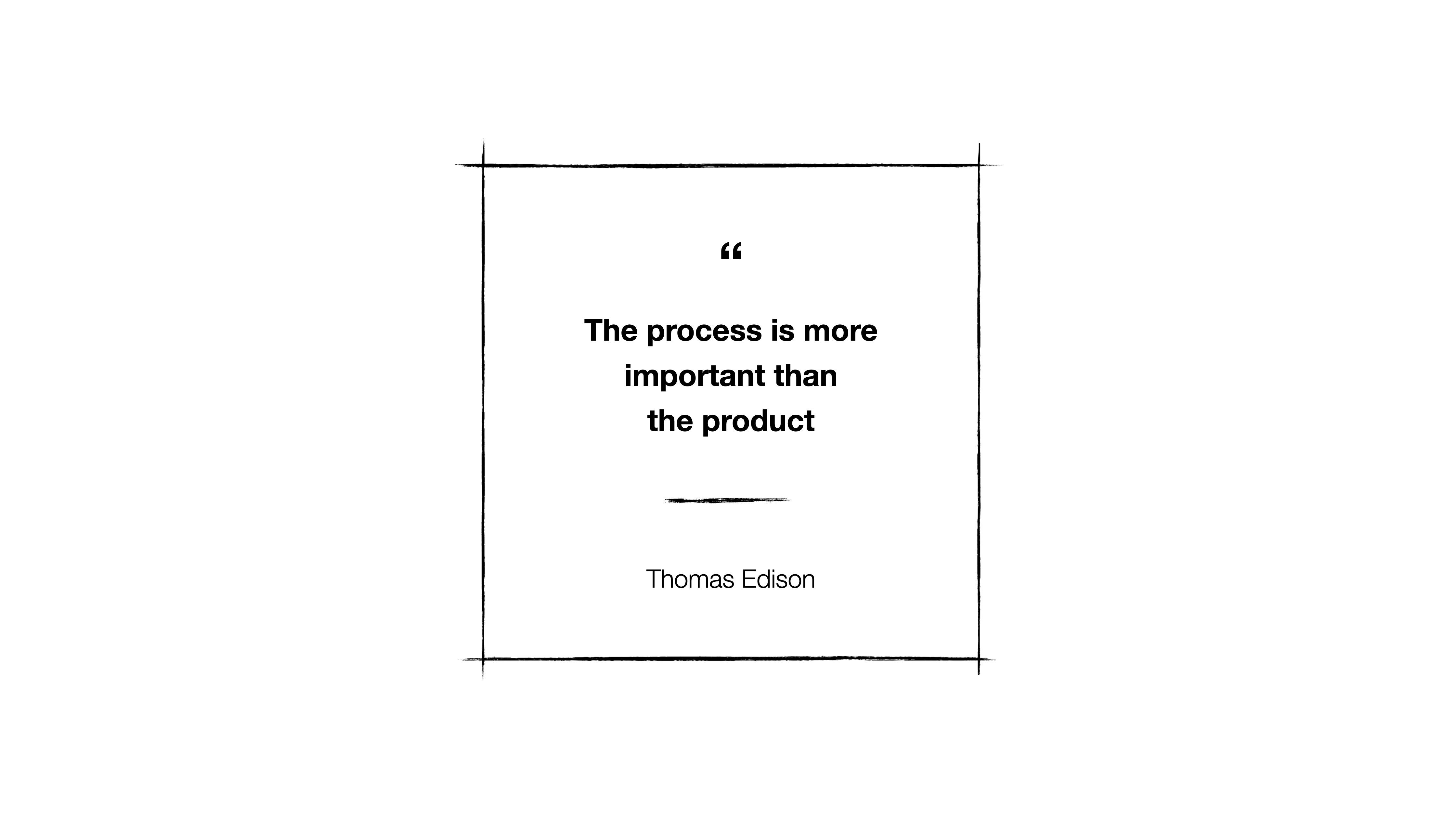
Did you know Thomas Edison tested more than 6,000 filaments before inventing the light bulb? He used to say, “The process is more important than the product.”
For him, process was invention. The bulb, and the light it gave, came only through thousands of rigorous, precise, repeatable experiments. Those experiments were possible because he had built a precise, structured system of experimentation. That’s how his genius could shine. What if your strategic genius took inspiration from his?
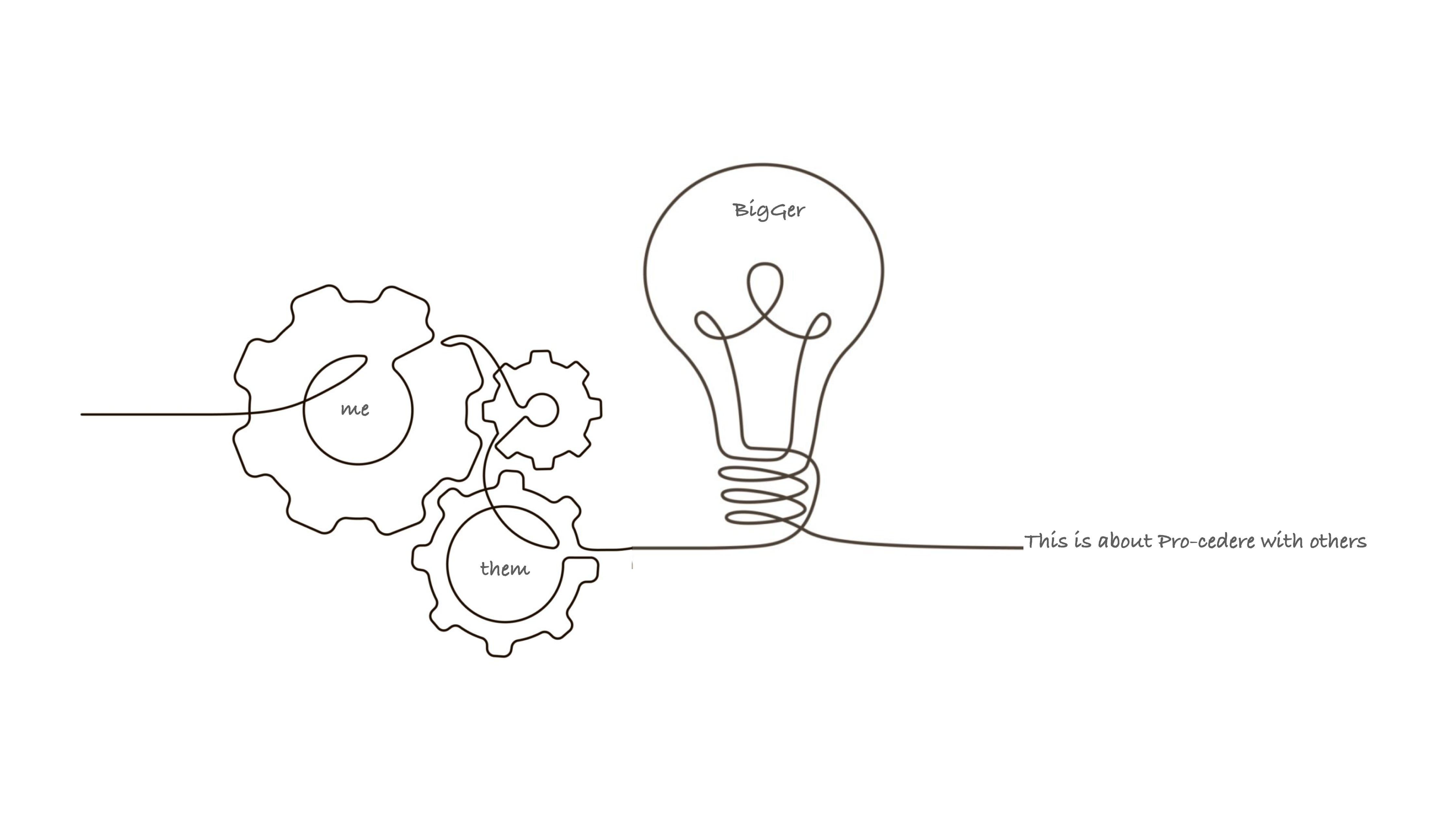
Let’s pause for a second on that word, process. It comes from the Latin verb procedere, composed of pro (“forward”) and cedere (“to go, to walk”). In other words, process is literally what allows you to move forward.
Yes, setting one up takes time. Sometimes it even feels like losing time. But by slowing down for a few days, you create the conditions to move faster later. It’s a structured path forward, precisely because it’s shared. John sets the financial frame, Jane prepares the market study, John-Jane drafts the core. You step in at key moments to arbitrate and align.
It’ll go slower than doing it alone. But if your ambition is to scale, you already know nothing happens without your team’s active participation in the thinking. Without that collective rhythm, aren’t you at risk of crafting beautiful plans that never get delivered? You know the answer, you’ve lived it.
In that orchestrated reflection, new ideas will emerge, understanding will come naturally, and alignment will follow. The plan is the photo finish, the outcome. The process is the road that gets you there, together.
You want a clear strategic plan for 2026? What if you slowed down just a bit to design a system for shared strategic thinking? In the end, you’d gain in speed, impact, and scalability.
Moving faster while stepping back
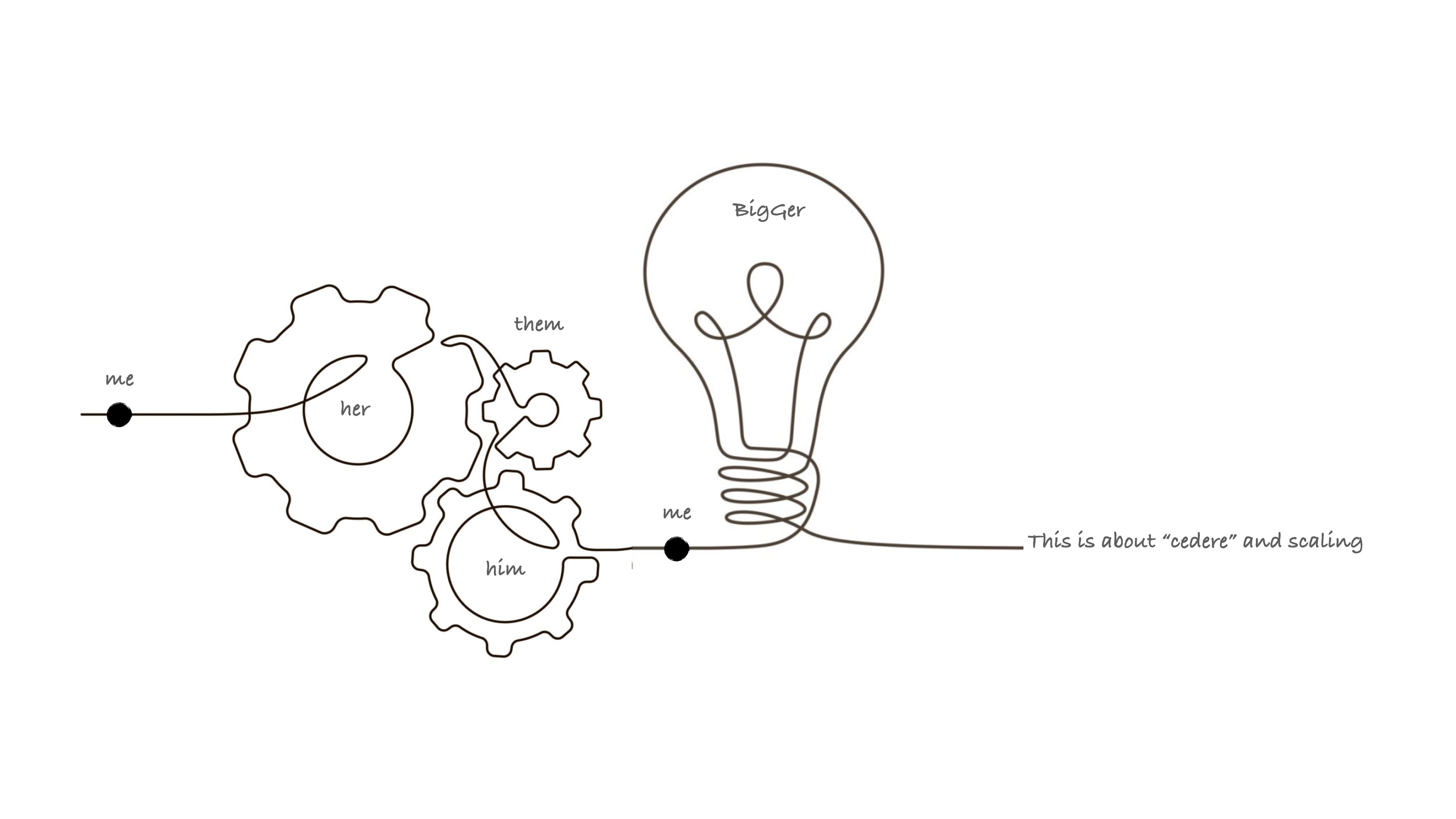
Pro-cedere. We just said it: to go forward. But what’s even more beautiful, and might just reconcile you with the idea of process, is that cedere also means to withdraw ! No way, really? Oh yes, really.
You want your team to own the plan, to move faster. So what if you saw this effort to structure your process as the very way to achieve that, without compromising on quality?
At first, you carried the entire reflection yourself. But isn’t your challenge now to enable others to carry it too? That’s exactly what a well-designed process does: it helps you grow as a leader while allowing new leaders to emerge.
By processing, you learn to move forward while stepping back just enough for others to carry the light in turn. You build a frame that guarantees the quality of thinking while gradually freeing yourself to focus on where you truly add value. You allow your team to think first with you, and eventually without you.
Given your ambition, you already know it’s a necessary step. One you can now, having reconnected with its deeper meaning, maybe even embrace, dare I say, with a certain pleasure.
Re-processing to sustainably scale
You’d already touched on this reflection last year without really integrating it. Now, we’ve just re-processed it.
Re-processing isn’t redoing. It’s revisiting a situation or a challenge with fresh eyes, enriched by what you’ve lived since, and drawing a deeper lesson from it.
And you know, to be honest, I struggled to write this letter today. Because I too, personally, find processes relatively “boring”. But I’m glad I did, and that we reopened this topic together. Because I know how foundational it is to your leadership, and how much it can help you go as far as you want with your team by creating the conditions for genuine collective intelligence.
So what if, this year, instead of chasing the perfect plan, you focused on creating the perfect conditions for your team to think the next one better, together?
My dear you, while you are about to frame your strategic plan for 2026, keep Edison in mind — and stay fully aware that light doesn’t shine any less when others learn to turn it on. Quite the opposite.
Take care,
Adri
📪 P.S. Next week, as we talk about passing it on, we’ll probably dive into how to integrate coaching into your leadership — how to do it right, and what to stay far away from.📭
Coach yourself.
Coaching Science
🧠 Reprocessing is a cognitive and collective technique that helps leaders revisit a past experience not to repeat it, but to integrate it more deeply — transforming hindsight into shared foresight. It’s the art of slowing down to understand what actually happened, so the next move can be wiser and more aligned.
Originally rooted in experiential learning theory (Kolb, 1984) and expanded through Peter Senge’s The Fifth Discipline (1990), this approach sees learning as a systemic process: progress happens when teams reflect not only on what they did, but on how they think and coordinate together.
It works because it mirrors how the brain — and organizations — consolidate memory: by re-examining and reframing past actions, both neural and collective pathways strengthen. Decades of research on learning organizations show that structured reflection boosts retention, shared understanding, and long-term performance. In short: reprocessing is how teams learn to learn ; and leaders learn to lead, better.
Coaching workout
✍️ 🙌 What if, this week, you didn’t start by writing the 2026 plan, but by drawing the process that will lead there? You might take a blank page and begin to sketch how these next two months could unfold: from the first collective reflection to the moment the plan comes together in January.
Not a polished diagram, just a first draft. A way to see the path before walking it. You could then bring this outline to your team, not as an answer, but as an invitation to shape it together: what steps, what topics, what measures of success, what rhythm would make this process truly collective?
In doing so, you may find that alignment begins long before the plan itself, in the shared act of designing how you’ll think together. And from there, naturally, leverage that design to frame your 2026 plan with greater efficiency, ownership, and flow.
Coaching ressources
📚 For more: The Fifth Discipline by Peter Senge. A classic on how high-performing teams build shared understanding before taking action. Senge shows that real progress comes from designing how we think together. The process, not just the plan.